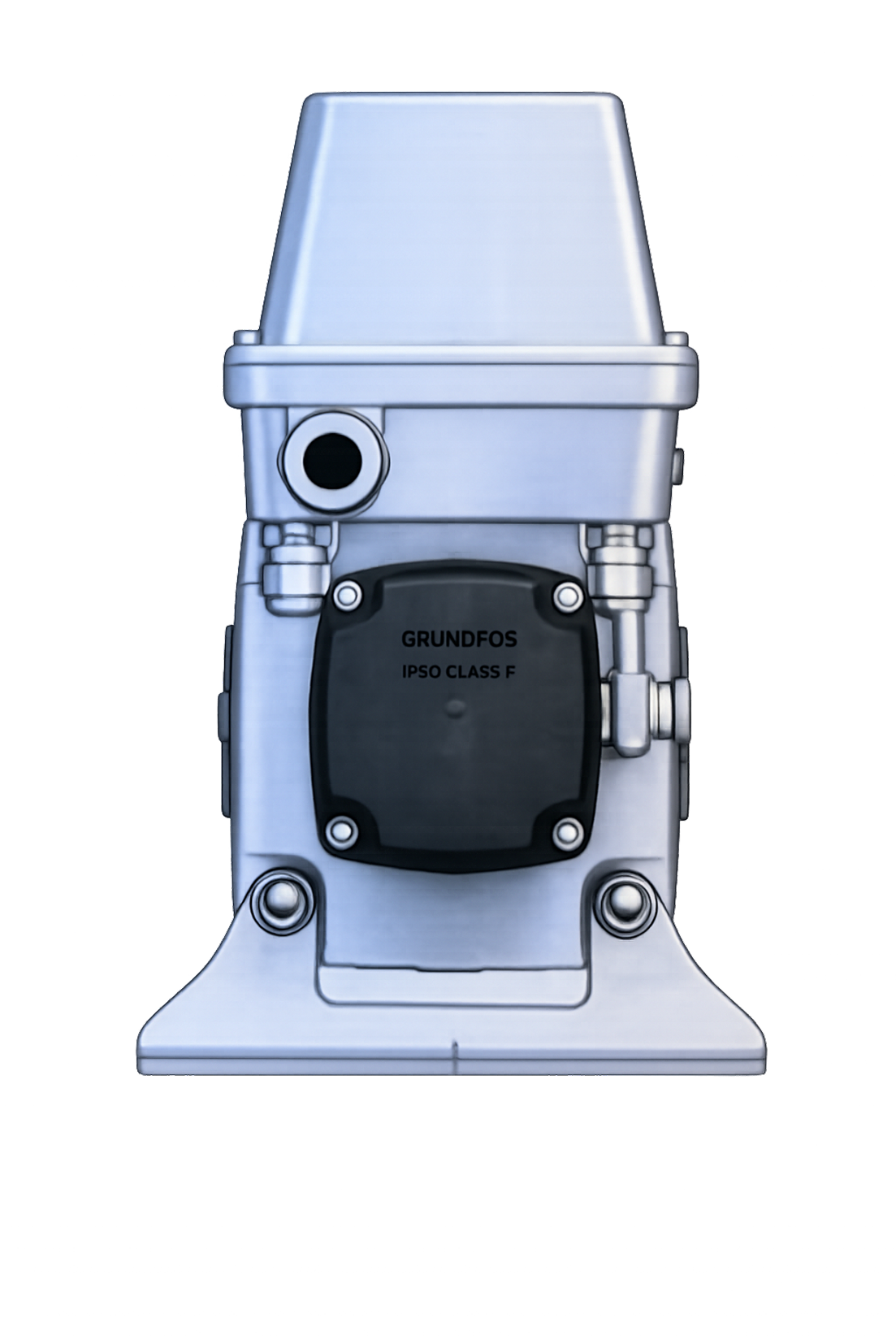
A standby generator coolant heater holds the engine coolant at 40 to 55 °C while the set waits, so the engine starts easily and takes load the moment the mains fails. We size it on the coolant volume of the engine, not on the kVA rating of the alternator.
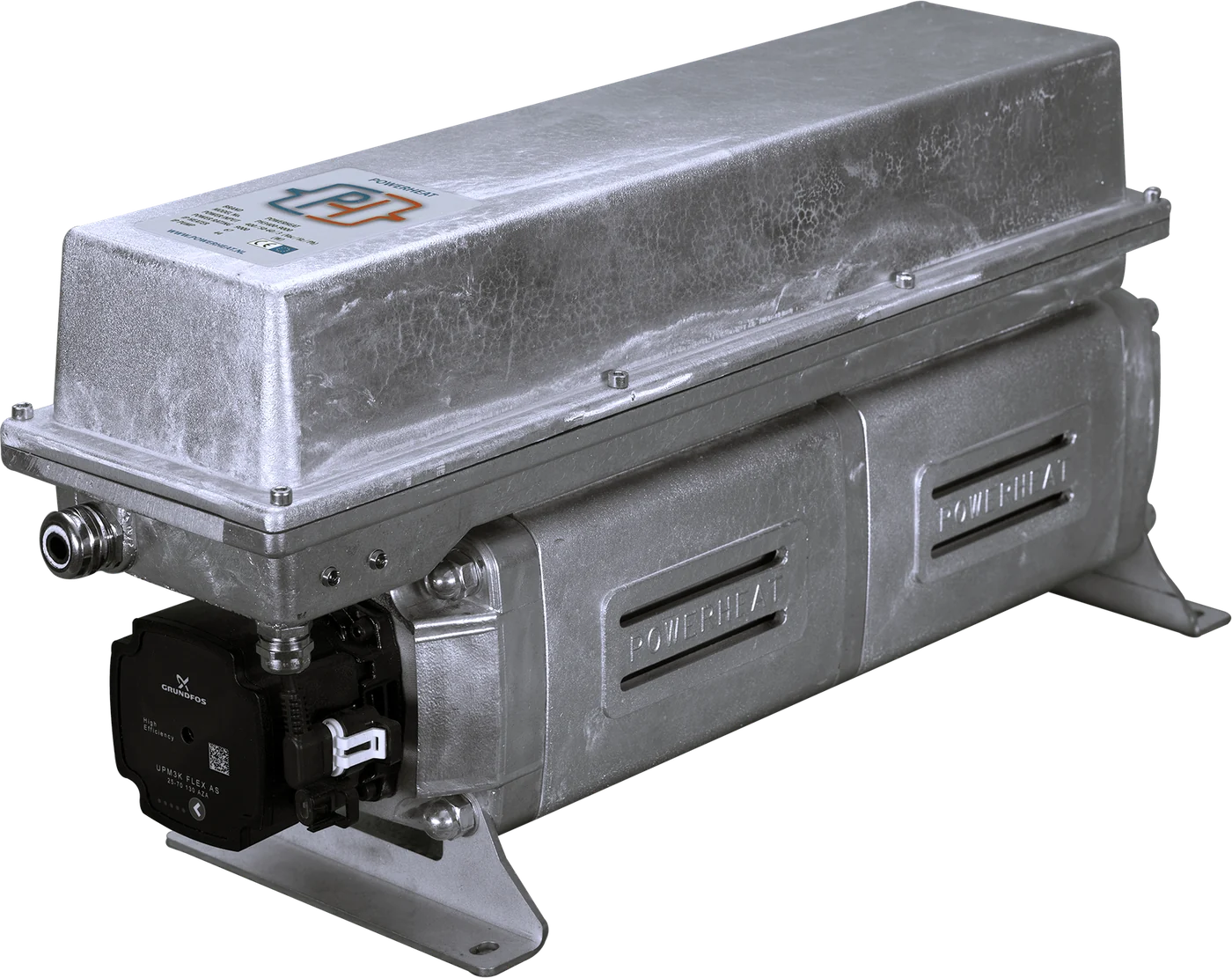
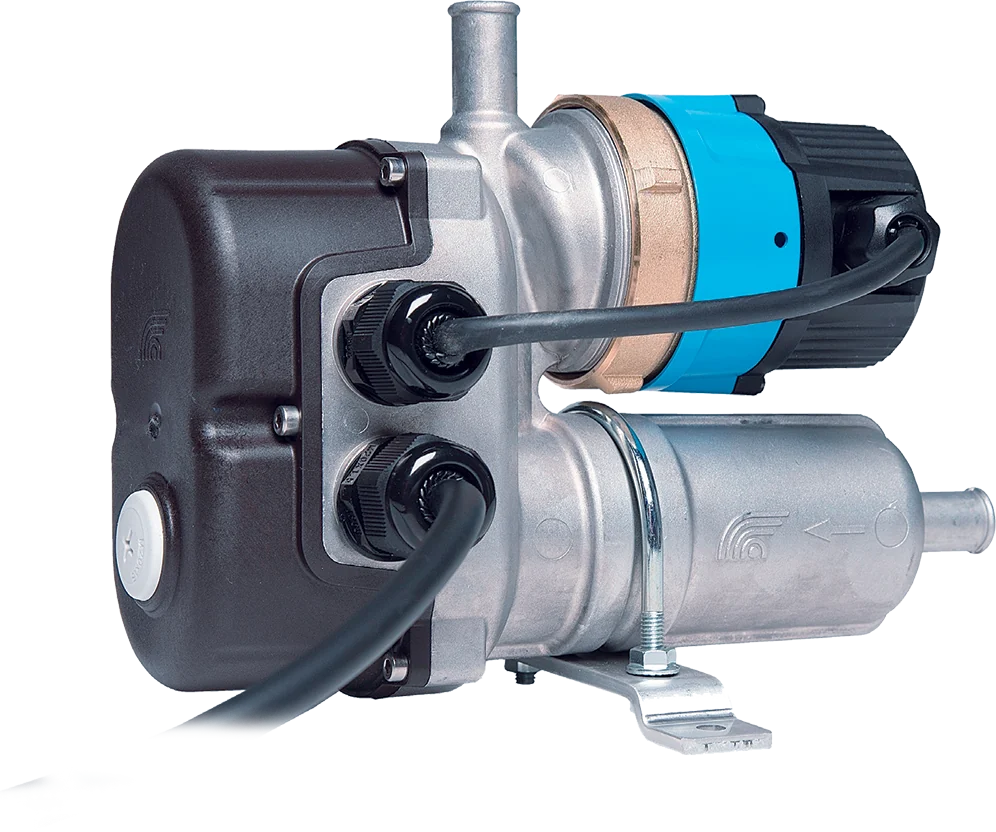
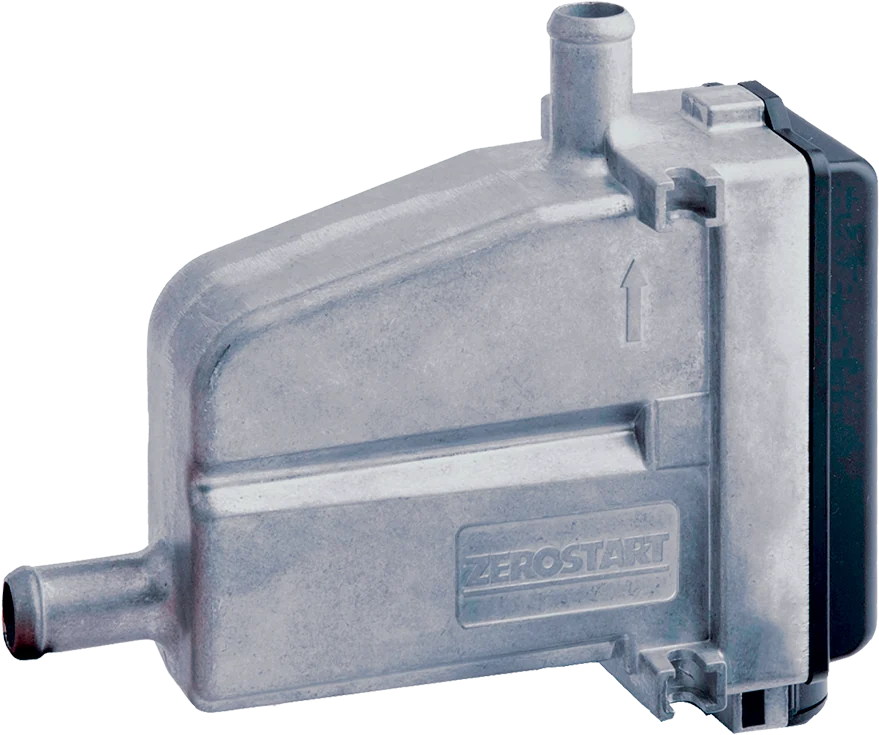
Sets with 150 to 500 litres of coolant take a POWERHEAT 12 – 26 kW on 400 to 690 V three phase; smaller sets take a TopStart, FlowStart or Zerostart. Every unit is connected in bypass, so the cooling system of the engine itself is not modified.
The coolant volume of the engine decides the size, not the kVA rating. Up to 30 litres: Zerostart or FlowStart. 30 to 150 litres: TopStart. 150 to 500 litres: POWERHEAT 12 – 26 kW. Where the set stands and the target coolant temperature then fix the exact output.
Turbocharged engines now deliver far more power per litre of coolant than older blocks, so two 500 kVA sets can carry very different volumes. The heater warms the coolant, and that is a figure in litres. Send the engine make and model and we check the volume against the engine data.
A set in an outdoor container or a rooftop enclosure loses heat all the time; the same set in a heated plant room hardly does. For exposed sets we move up a step in output. Tell us whether the set stands indoors, in an enclosure or in the open.
The engine builder specifies the standby coolant temperature, usually between 40 and 55 °C. TopStart is adjustable from 0 to 80 °C and POWERHEAT from 20 to 90 °C. Zerostart and FlowStart have fixed thermostats, so on those series the choice of unit sets the temperature.
Because the heater works in bypass, an undersized unit does not harm the engine: it only takes longer to reach the set point. An oversized unit gets there sooner and then switches off on its thermostat.
A standby set stands still for weeks and must then run up and accept full load within seconds of a mains failure. Started cold, a large diesel does that with thick oil and tight clearances, which is where most start-up wear happens. Held at 40 – 55 °C, it takes load straight away and with less wear.
Data centre and hospital sets, fire pump engines, rail power packs, offshore emergency sets and containerised mobile gensets. They share the same duty: long standstill, then full output at once.
A short test run on a cold engine often ends before it reaches operating temperature, which leaves condensation and unburned fuel behind. On a preheated engine the same run starts at 40 – 55 °C.
Fewer cold starts mean less wear on bearings and liners and a longer interval between major overhauls. A warm engine also starts more cleanly, with fewer harmful emissions in the first minutes.
A prime power set that runs continuously stays warm on its own, and so does an engine in a room kept at its target temperature. In those cases we tell you a heater adds nothing.
A short run on a cold engine rarely reaches operating temperature and leaves condensation behind. A preheated engine starts that run at 40 – 55 °C.
Zerostart has no moving parts at all. On pumped units the pump and the thermostats are the only wear items, and POWERHEAT is sealed to IP67.
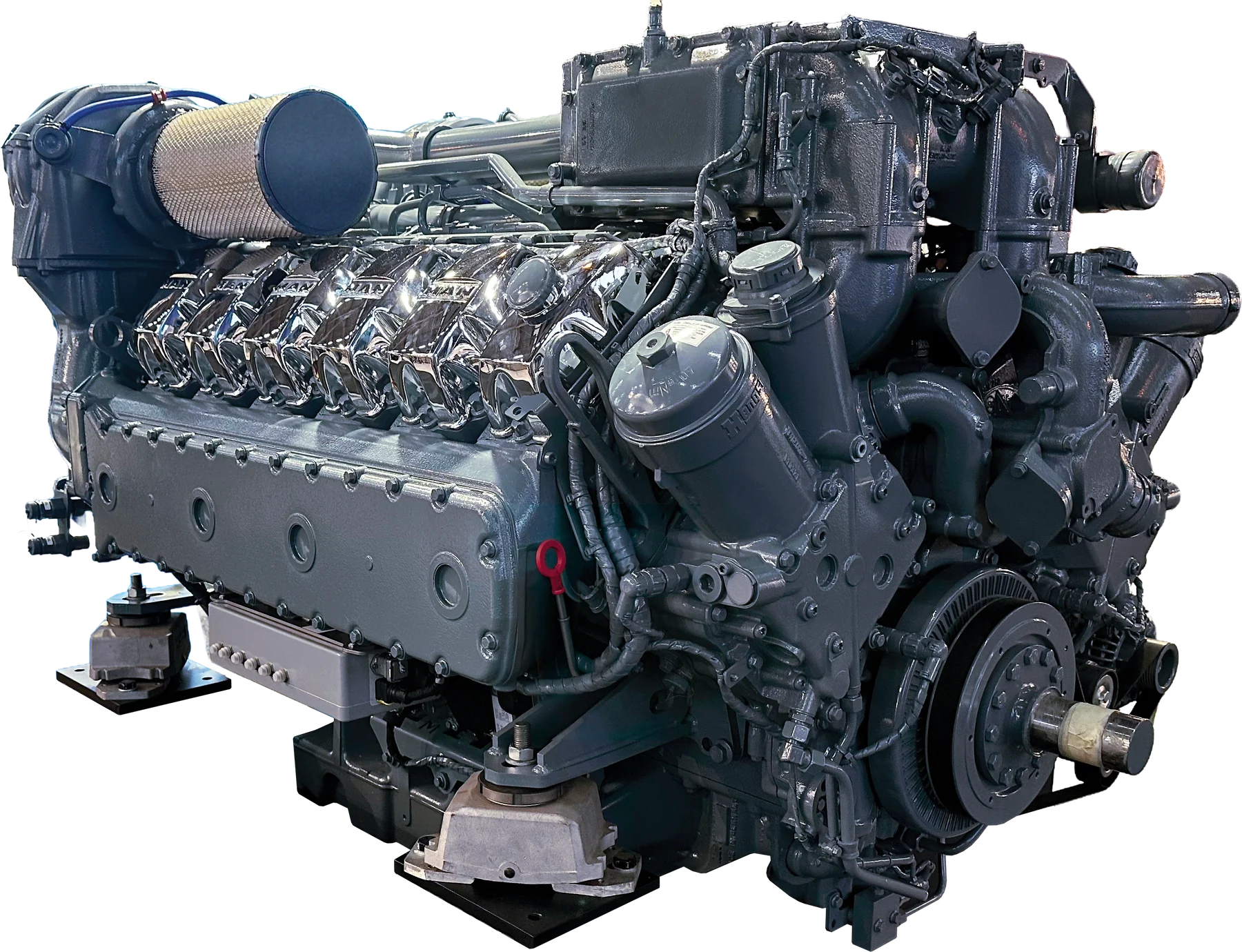
The heater is fitted in bypass with two hoses and a bracket, so the engine is not modified. We fit Caterpillar, Cummins, MTU, Perkins, Volvo Penta, MAN and other makes.
Up to 3 kW a heater runs on 230 V single phase. Larger TopStart units and all POWERHEAT units run on three phase, POWERHEAT on 400 to 690 V. Each unit is built for one voltage, so we confirm the supply at the set before we name the unit.
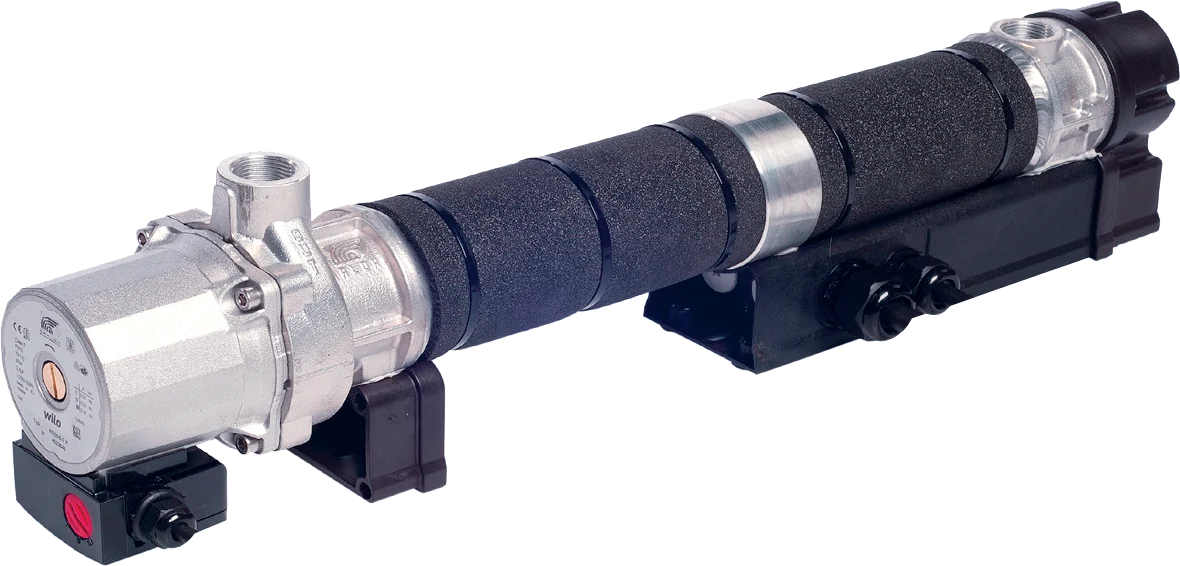

The heater is usually fed from the board that also feeds the battery charger and the enclosure lighting. That board must stay live while the set is not running. Anything above 230 V is connected by an electrician.
A three phase TopStart comes with a control box that holds the contactor and a transformer for the single phase pump and thermostats. POWERHEAT has the transformer, contactor and both thermostats built into its housing, so it connects directly to the three phase supply.
No, the coolant volume does. Two sets with the same kVA rating can carry very different volumes, depending on the engine. The volume is in the engine manual; send us the make and model and we check it.
Yes. The heater is connected in bypass: one hose from a low point on the block, one return to the engine. Nothing on the engine itself changes, only a bracket and the hose connections. Drain the coolant to below the tapping point before you start.
The engine builder specifies it; for most standby diesels it lies between 40 and 55 °C. TopStart is adjustable from 0 to 80 °C and POWERHEAT from 20 to 90 °C. Send us the figure from the manual and we confirm the series.
Only while the thermostat calls for heat. Once the coolant reaches the set point the element switches off, and it switches on again as the engine cools. How often depends on where the set stands, which is why we ask about the ambient conditions.
Sets with 150 to 500 litres of coolant take a POWERHEAT 12 – 26 kW. The housing is the same size from 12 to 26 kW, which helps in a packed plant room or container. Above 500 litres, two or more units are fitted to one engine.
An immersion heater is an element fitted into the engine block; today it is mainly used on small automotive engines. A bypass tank heater sits outside the engine in the coolant circuit. For standby sets we recommend the bypass type: it heats more evenly and can be sized for the full coolant volume.
Every unit is CE marked. About 90 % of what we supply is produced in Europe: POWERHEAT in France and TopStart in Belgium.
Engine type, coolant volume, available voltage and where the set stands. We reply with the unit that fits and its datasheet.