26 kW Coolant Heater
on 400 V
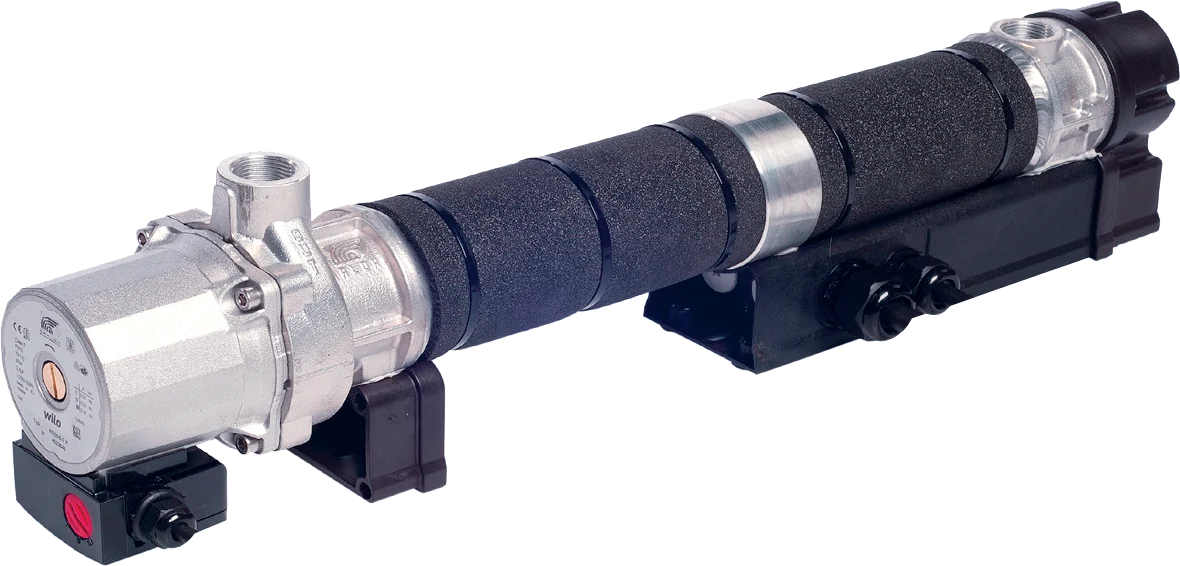
The 26 kW coolant heater is the largest unit in the POWERHEAT line, our own heater, built in France. On 400 V three phase it heats engines with 150 to 500 litres of coolant; versions for 440, 480 and 690 V use the same housing. The thermostat is adjustable from 20 to 90 °C.
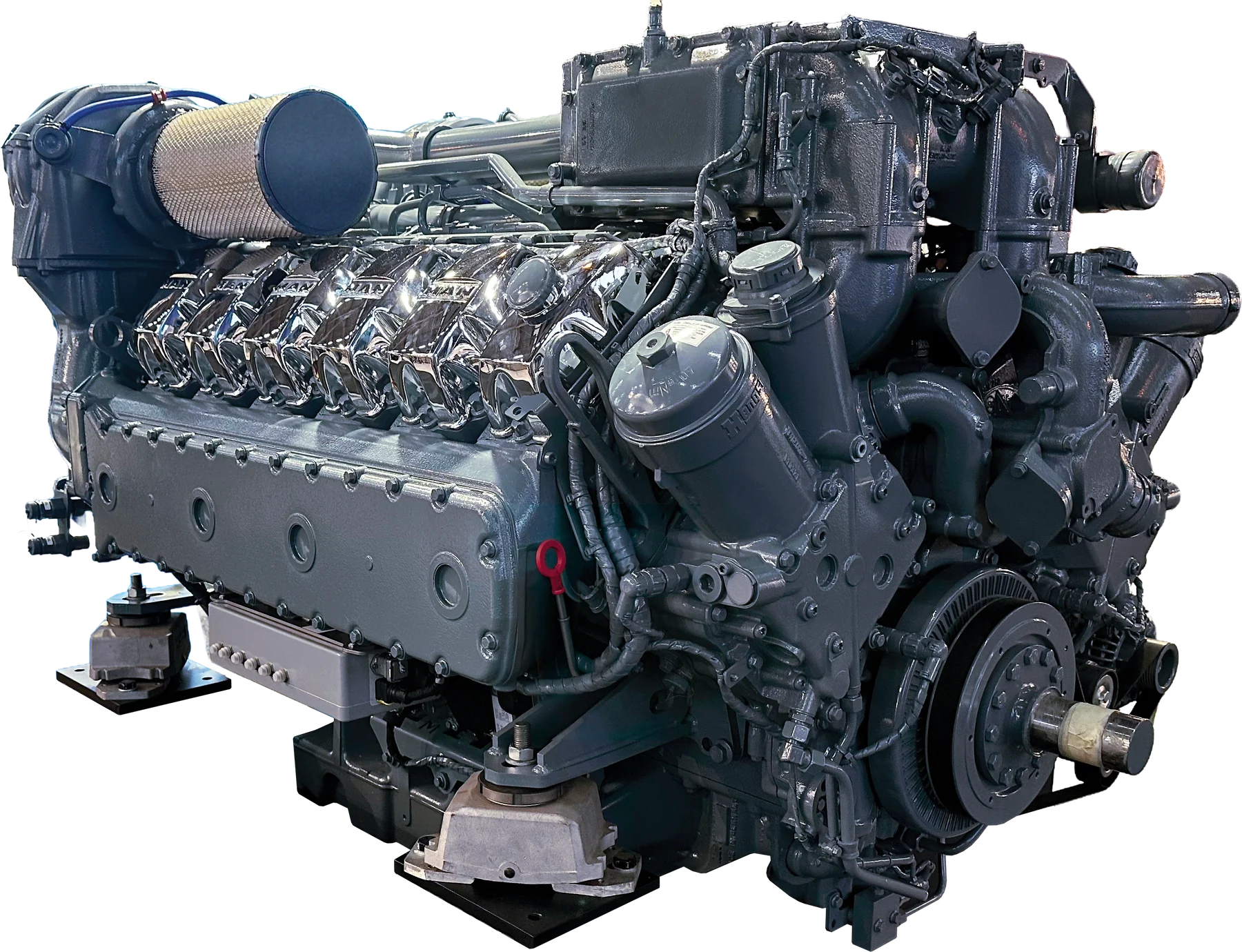
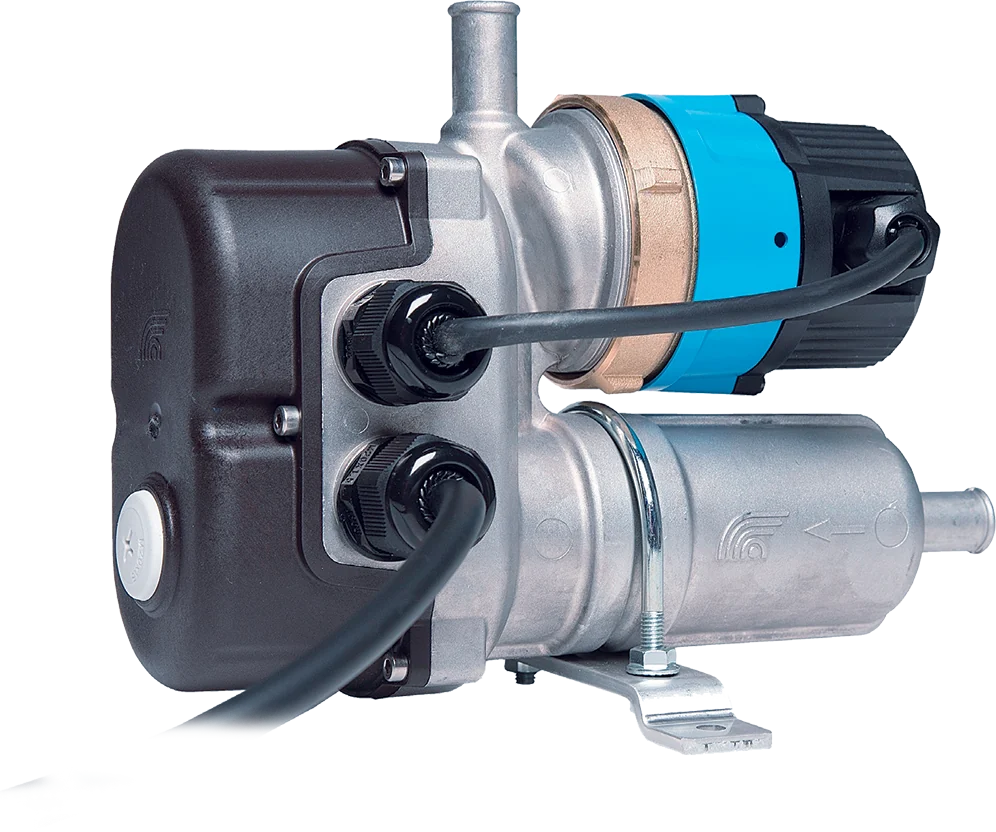
The element is cast into an aluminium heat exchanger and never touches the coolant. Pump, transformer, contactor and both thermostats sit in one IP67 housing of 668 × 190 × 291 mm, the same size as the 12 kW unit. POWERHEAT is fitted as first assembly on several MAN marine engine applications.
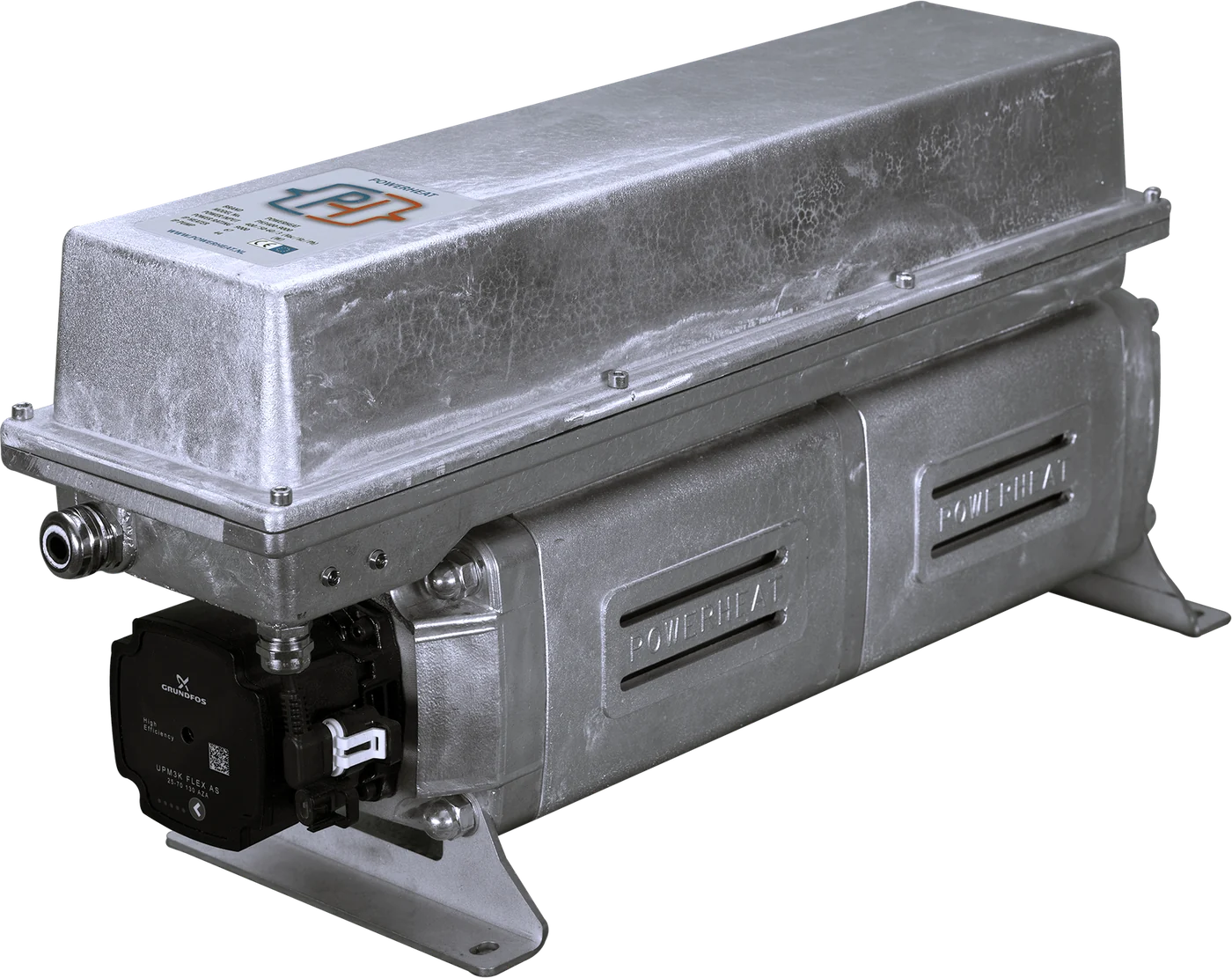
What a 26 kW coolant heater covers
The POWERHEAT line covers 150 to 500 litres of coolant in six outputs: 12, 15, 18, 20, 24 and 26 kW. The 26 kW unit is chosen for the upper end of that band, or for engines in cold, exposed positions. Below 150 litres a TopStart is the better fit.
Choosing between 12 and 26 kW+
All six outputs share the same housing, pump and connections, so the choice is only about heat. The volume sets the starting point; the ambient temperature and how quickly the engine must reach its set point decide the step. An undersized unit does not harm the engine in bypass, it only takes longer.
Which engines reach this size+
Large standby generators, marine main and auxiliary engines, rail and industrial diesels: typically high-speed V engines up to V20. The volume is in the engine manual; send us the make and model and we check it.
Above 500 litres+
One engine can take two or more POWERHEAT units, for example 2 × 26 kW. Very large low-speed propulsion engines are heated from the ship's boiler system instead.
400 V, 440 V, 480 V or 690 V
400 V three phase is the standard industrial supply in the UK and the default for this unit. POWERHEAT is also built for 440 V, 480 V and 690 V, voltages found on ships and offshore installations. Each version is wired for one voltage, so we confirm the supply before we name the model.
Connected load+
At 26 kW the heater is a real load on the board: about 38 A per phase at 400 V and about 22 A at 690 V. Cable, protection and isolation are sized by the installing electrician from the datasheet.
Why single phase is not an option+
Above about 3 kW a heater needs three phase. Sites with only 230 V are limited to Zerostart, FlowStart and TopStart 1 – 3 kW, which caps the engine size. For a large engine without three phase the answer is a supply upgrade, not a smaller heater.
Built-in control+
The transformer for the 230 V pump, the contactor and both thermostats sit inside the POWERHEAT housing, with a lamp for power on and one for heating in operation. The unit connects directly to the three phase supply; no separate control box is needed.
Below 150 litres it is. We size on coolant volume first and name the smallest output that reaches the set point.
Then this is not the unit. Single phase stops at about 3 kW; a large engine needs a supply upgrade first.
From 12 to 26 kW the housing stays 668 × 190 × 291 mm, compact for this output. That is why it suits containers and engine rooms.
What fitting a unit this size involves
Fitting a 26 kW coolant heater is two jobs: the coolant connection and the electrical connection. With its own pump the unit does not rely on convection, so it can be mounted wherever there is room near the engine.
Coolant side+
Two 1" connections: one draws from a low point on the block, the other returns to the engine. Maximum operating pressure is 10 bar. Drain the engine to below the tapping point before you start.
Mounting and access+
The unit weighs 29,3 kg and stands on its own supports, not on the hoses. Leave access to the pump and the thermostat. All dimensions are on the datasheet in millimetres.
Before you order+
We need four details: coolant volume, supply voltage, the target coolant temperature from the engine manual, and where the engine stands. With those we confirm the model number.
Datasheets as open PDF downloads
Frequently asked questions about the 26 kW coolant heater
What coolant volume does a 26 kW unit cover?+
The POWERHEAT line covers 150 to 500 litres. The 26 kW unit is chosen towards the upper end of that band, or lower in the band when the engine stands in a cold, exposed position. Below 150 litres a TopStart is the better fit.
Can it run on 690 V instead of 400 V?+
Yes. POWERHEAT is built in 400, 440, 480 and 690 V versions (PH3400, PH3440, PH3480 and PH3690). Each is wired for one voltage, so state the supply in your enquiry.
Is there a single phase 26 kW heater?+
No. Above about 3 kW a heater needs three phase. With only 230 V available the options stop at TopStart 1 – 3 kW.
What is the thermostat range?+
The control thermostat is adjustable from 20 to 90 °C and a safety thermostat cuts out at 120 °C. Most engine builders ask for 40 to 55 °C on a standby engine; the exact figure is in the engine manual.
Does the heating element touch the coolant?+
No. The element is cast into the aluminium heat exchanger, which is Teflon coated. The coolant flows over a large heating surface without direct contact with the element.
How much power does it draw?+
26 kW while the thermostat calls for heat and nothing once the set point is reached. How long it runs depends on how well the engine is sheltered. At 400 V the current is about 38 A per phase.
What is the difference from the 12 kW unit?+
Only the output. Both share the housing, the pump (2,8 m³/h), the 1" connections, the thermostats and the weight of 29,3 kg. Volume and ambient temperature decide which output you need.
Four details and we confirm the model
Coolant volume, supply voltage, target temperature and where the engine stands. We reply with the model number and its datasheet.